
Forest bathing and care farming, explained
A plain-English guide to the four modalities behind nature-based therapy, forest bathing, horticultural therapy, care farming and bush therapy, and who they help.
“Nature-based therapy” sounds lovely, but it can also sound vague. When a family or a support coordinator asks me what actually happens in a session, the honest answer is that there isn’t one single thing. Nature-based therapy is an umbrella, and underneath it sit several distinct, well-established practices, each with its own history, evidence and best-fit audience. This is a plain-English primer on the four you’ll hear about most: forest bathing, horticultural therapy, care farming and bush or adventure therapy. My aim is that by the end you’ll know what each one is, what the research does and doesn’t say, and which might suit the person you’re thinking of.
Forest bathing (Shinrin-yoku)
Forest bathing translates the Japanese term Shinrin-yoku, literally “bathing in the forest atmosphere”. It was coined in Japan in the 1980s as a public-health response to urban stress. Despite the name, there’s no water and no exercise goal. You move slowly, often in silence, and pay deliberate attention to what your senses pick up, the texture of bark, birdsong, the smell of damp leaf litter, light shifting through the canopy.
The evidence here is unusually robust for a wellbeing practice. Dr Qing Li and colleagues in Japan built a field they call “Forest Medicine”, and their studies consistently show that time among trees lowers stress hormones. A 2019 systematic review and meta-analysis in Environmental Health and Preventive Medicine found that across most included studies, salivary and serum cortisol, a key stress biomarker, was significantly lower after forest sessions than in urban controls. Researchers attribute part of the effect to phytoncides, the airborne compounds trees release, which appear to support immune function.
Forest bathing is less about doing and more about un-doing. For someone running on a constantly activated nervous system, that permission to simply notice can be the whole point.
Who it helps: people carrying chronic stress, anxiety or burnout; those who find talk-based therapy confronting; anyone who needs a gentle, low-demand entry point. It’s accessible across a wide range of ages and abilities.
Horticultural therapy
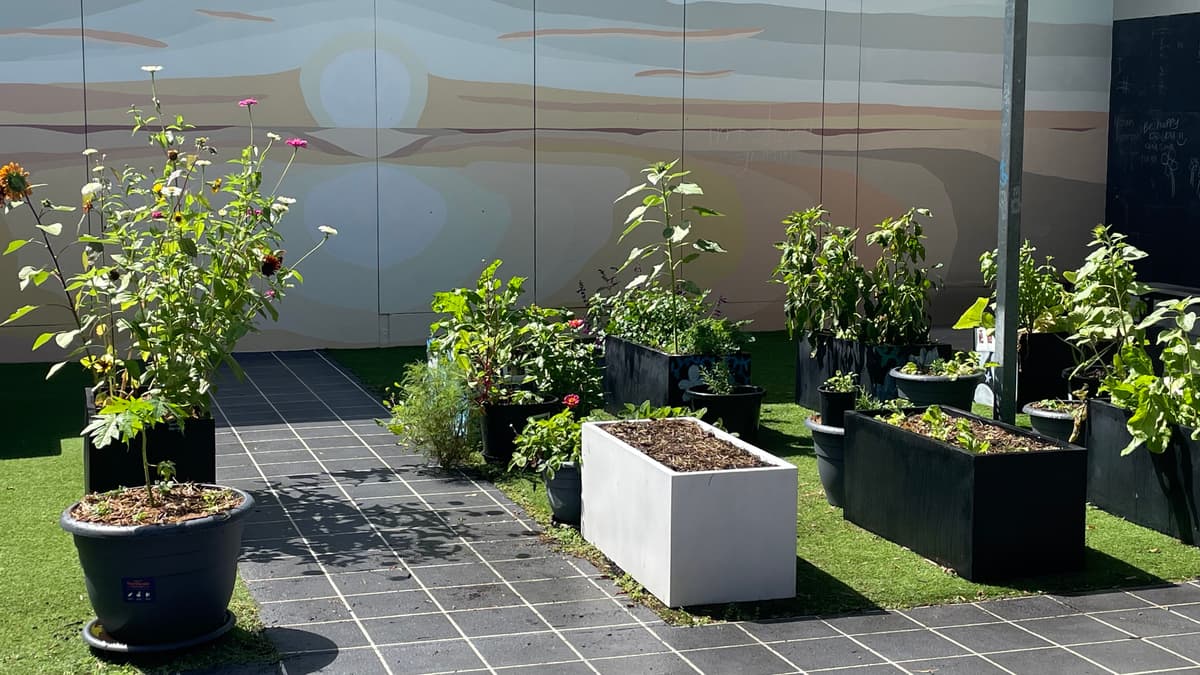
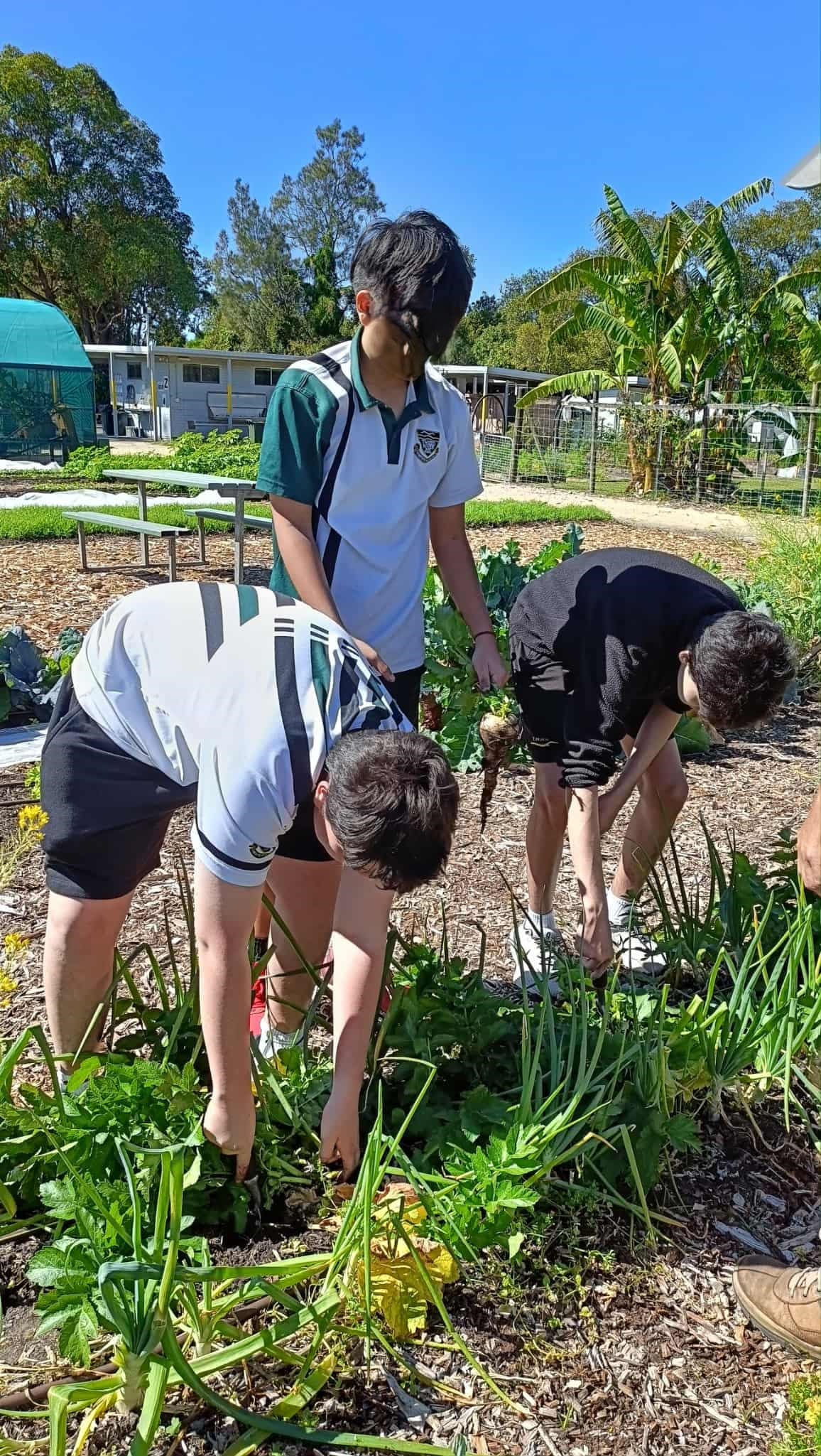
Horticultural therapy is the structured use of gardening and plant care to work towards specific, agreed goals, physical, cognitive, social or emotional. It is the most clinically formalised of the four, with decades of use in hospitals, rehabilitation units and aged care.
What makes it powerful is that the garden is endlessly adaptable. The same activity, say, potting seedlings, can build fine motor control for one person, sequencing and memory for another, and a sense of competence and routine for a third. Plants respond to care without judgement, which lowers the emotional stakes, and they offer a slow but real reward: something you tended is now visibly alive.
I’ve seen this directly. In a partnership with the Kamala Child & Adolescent Mental Health Unit at Lismore Base Hospital, we ran a before-and-after survey around a single therapeutic garden session. Afterwards, 100% of participants reported a “good” or “great” mood. Those rating their mood as “great” rose from 6% to 50%, and “low” or “average” ratings dropped to zero. One session isn’t a clinical trial, but it’s a clear signal that a well-run garden session can shift how young people feel in the moment, and those moments matter.
Who it helps: people in mental health recovery, those living with disability, older adults, and anyone working on motor skills, attention, confidence or daily structure. This is a core part of our Therapeutic Garden Program.
Care farming
Care farming (sometimes “social farming”) uses the rhythm and real work of a farm or productive landscape as the therapeutic vehicle. Rather than activities designed purely as exercises, participants take part in genuine, meaningful tasks, tending animals, growing food, maintaining the land. The therapeutic value comes from purpose, responsibility and belonging.
I want to be honest about the evidence, because care farming is sometimes oversold. A 2019 Campbell systematic review by Murray and colleagues found the picture is genuinely mixed: there was some evidence that care farms may improve depression and anxiety, and suggestions that young people’s coping can improve, but the research base is still largely qualitative and observational. Larger, better-designed studies are needed before anyone can make strong clinical claims.
What that mixed evidence tells me is not “this doesn’t work”. It’s “this works for the right people, in the right way, and we should measure honestly”. In practice, the participants I work with consistently value the dignity of doing real work that matters.
Who it helps: people who thrive on purpose and routine, including disengaged young people, those in mental health recovery, and adults seeking connection and structure.
Bush and adventure therapy
Bush therapy and adventure therapy use the outdoors, walking, navigation, shelter-building, group challenges, to build resilience, problem-solving and social connection. Mild, well-judged challenge in a safe setting helps people experience their own capability, often more convincingly than words ever could. It pairs naturally with Country-based learning and is frequently the most effective option for young people who don’t respond to sitting still indoors.
Who it helps: adolescents, groups working on teamwork and confidence, and anyone who learns best through doing.
How this fits together at NatureWhole
In reality, a good practitioner rarely uses just one of these in isolation. A session might begin with a few quiet minutes of forest-style attention to settle the nervous system, move into hands-in-the-soil garden work, and finish with a short walk. The modality is the tool; the person and their goals come first.
If you’re exploring support for yourself, a family member or a client, our community sessions are tailored across all four approaches, and many participants access them through NDIS funding under capacity-building and core supports. We’re happy to talk through how that works and which approach might suit.
There’s no pressure and no jargon required at this stage, if you’d like to understand your options, you can book a call or simply get in touch.
- forest bathing
- horticultural therapy
- care farming
- nature-based therapy
- ndis