

Why hands-on garden learning re-engages disengaged students
How responsibility, real work, consistent relationships and bodily regulation in a school garden bring switched-off students back to learning.
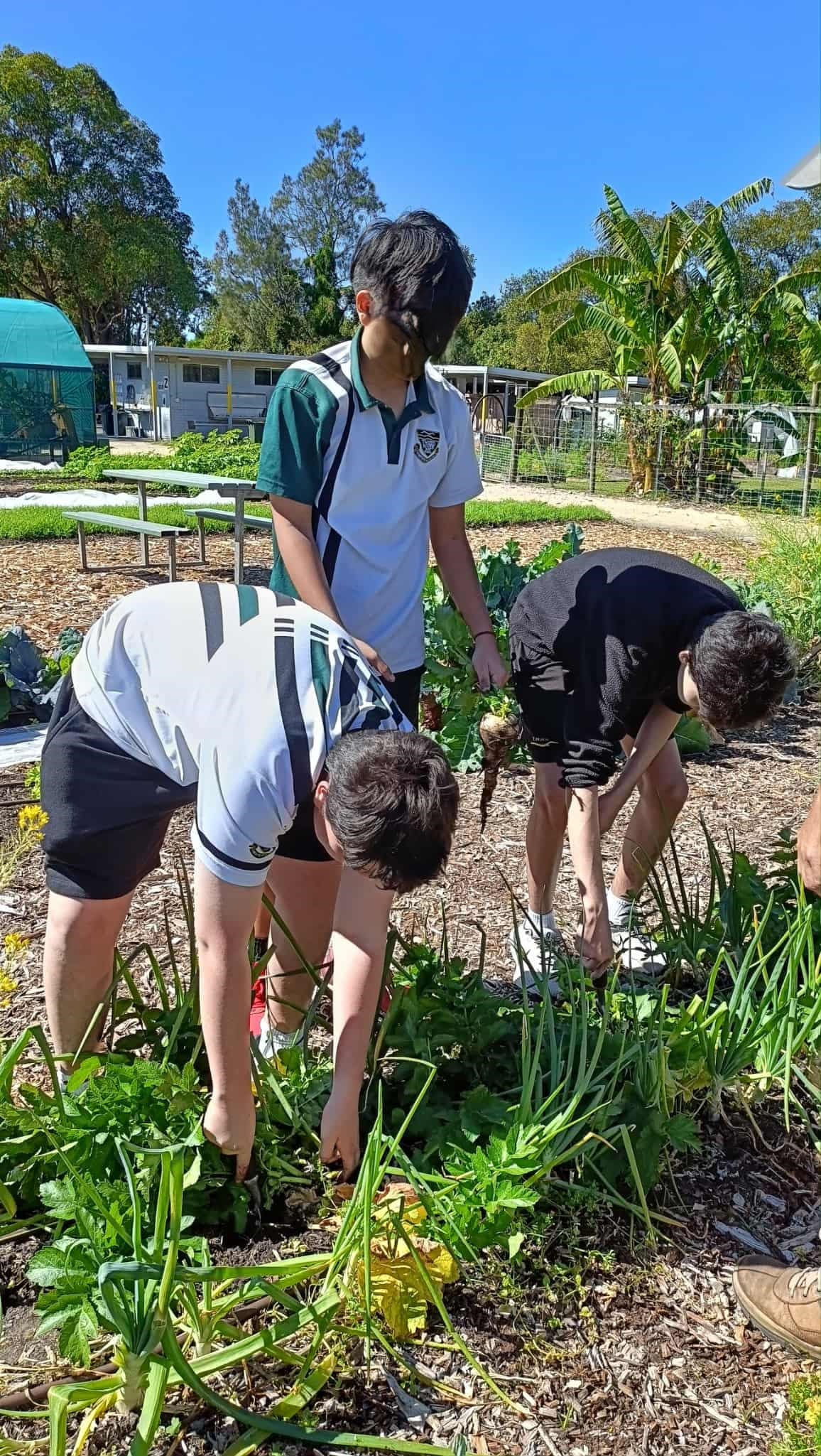
Most teachers can name them in the first week. The student who has decided, quietly or loudly, that school is not for them. The one who has stopped putting their hand up, stopped handing things in, or stopped coming through the gate altogether. Disengagement rarely announces itself as a single event. It builds, a slow drift away from a classroom that has, for whatever reason, stopped feeling like a place where they can succeed.
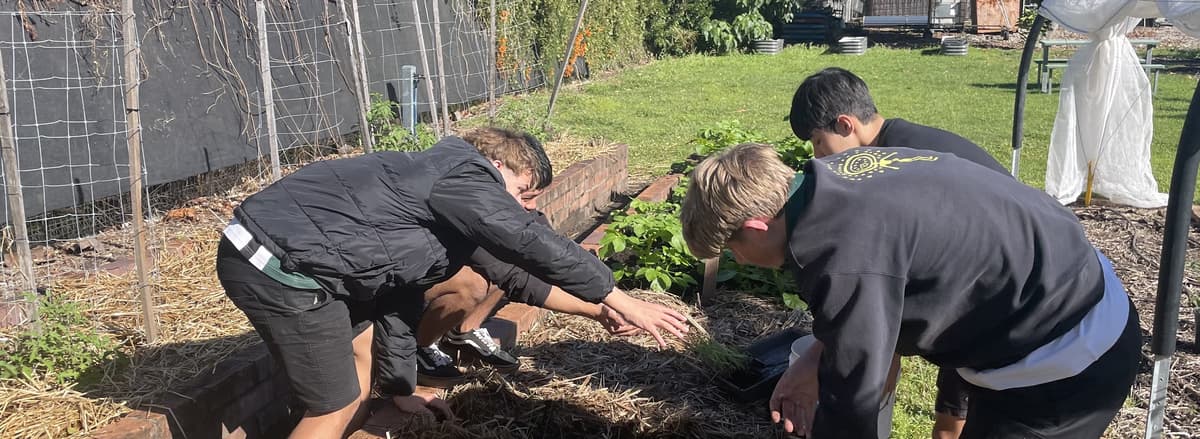
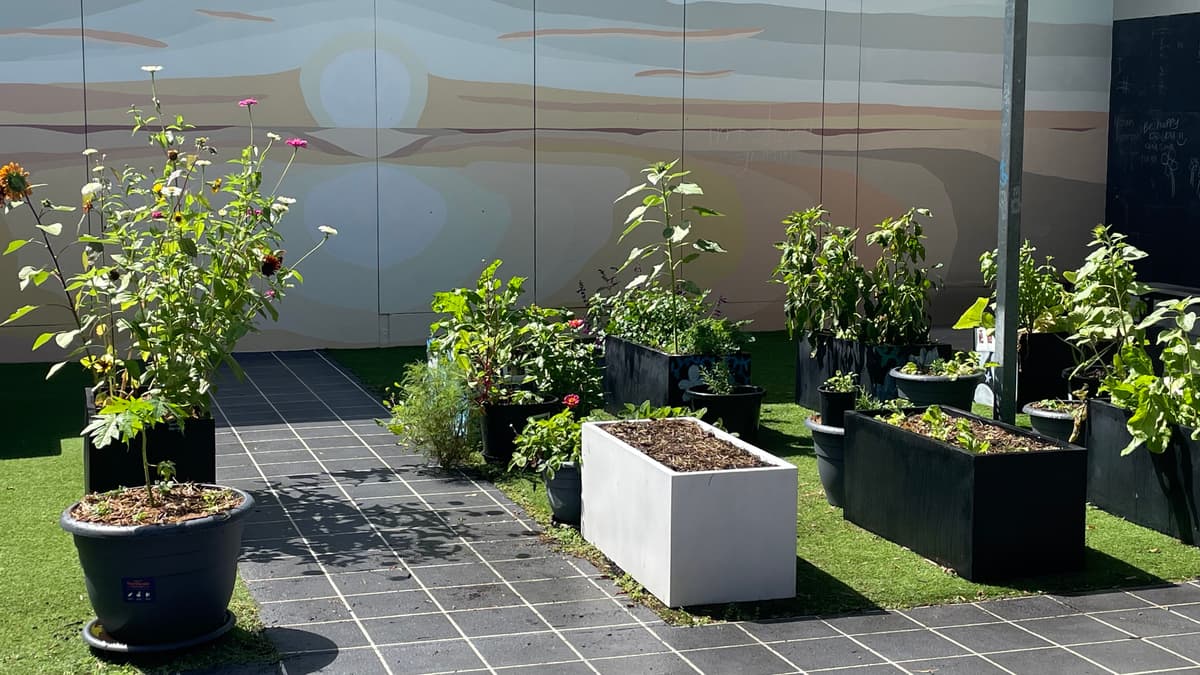
At NatureWhole we work with these students every week, in the garden, with their hands in the soil. What we see again and again is not that they cannot learn. It is that the conditions for learning have shifted, and the garden quietly restores them. This article unpacks why that happens, and what it means for teachers, heads of wellbeing and support-unit staff thinking about whether a garden program might help the young people they worry about most.
Responsibility for living things changes the stakes
A worksheet can be ignored without consequence. A seedling cannot. When a student is responsible for a row of lettuce, a young fruit tree or a brood of chickens, the work becomes real in a way that abstract tasks never quite manage. If they do not water, the plant wilts. If they do, it grows. The feedback is honest, immediate and impossible to fake.
This matters enormously for a disengaged student, because so much of their experience of school has been about performing for marks they have stopped believing in. The garden replaces that with something more grounded:
- Cause and effect they can see. Effort produces a visible, living result over days and weeks.
- Genuine stakes without the threat of failure. A plant that struggles is a problem to solve, not a grade to fear.
- Being needed. Living systems depend on the student showing up, which is a powerful reason to come back.
When a young person who has been told, implicitly, that they are a problem to manage discovers that something living depends on them, the story they tell about themselves begins to change.
Real work is more motivating than abstract tasks
There is a meaningful difference between simulated work and the real thing. Building a garden bed, propagating cuttings, harvesting and preparing food, repairing a fence, these are not exercises that mimic adult competence. They are adult competence, scaled appropriately. Students sense the difference instantly.
A growing body of research supports what we observe. A 2025 study in Frontiers in Psychology on therapeutic horticulture and academic resilience found that students working together on intrinsically meaningful, garden-based activities developed stronger social support and wellbeing, with engagement driven by genuine, hands-on involvement rather than passive participation. The recovery effects, the researchers note, depend on active interaction, the very thing disengaged students have withdrawn from in the classroom.
Real work also rebalances who gets to be good at school. A student who finds reading hard may be the one who instinctively understands soil, or who has the patience to graft a tree, or who can fix the irrigation when no one else can. Competence becomes visible across a much wider range of strengths, and visible competence is the soil that confidence grows in.
Consistent relationships, week after week
Disengagement is often, underneath everything, a relationship problem. A student who does not trust that an adult is genuinely on their side will not take the risk of trying and failing in front of them. Rebuilding that trust takes time and, crucially, consistency.
The School Program is built around this. We come to your site one day a week, every week, working with the same students in the same place over a term and beyond. That regularity does something a one-off excursion never can. It lets a relationship develop at the student’s pace, no pressure, no performance, just a reliable adult who turns up, remembers last week, and treats them as capable.
For support-unit and wellbeing staff, this consistency also means the garden becomes a known, predictable part of the week, an anchor point students can rely on, and a setting where you can observe a young person in a completely different light from the classroom.
Regulation through the body, not just the mind
You cannot reason a dysregulated student into learning. When a young person is anxious, overwhelmed or shut down, their nervous system is not in a state where the thinking brain is available. This is where outdoor, physical, sensory work earns its place: it regulates the body first, and learning follows.
The research here is robust. A systematic review and meta-analysis published in the International Journal of Biometeorology found that across nearly all included studies, cortisol, the body’s primary stress hormone, was significantly lower after time spent in forest environments compared with urban settings. Dr Qing Li’s foundational work on shinrin-yoku (forest bathing) points to similar effects on stress physiology and mood. Gardens offer the same essential ingredients: green space, physical movement, sensory richness and unhurried time outdoors.
We have measured this in our own practice. Working with the Kamala Child & Adolescent Mental Health Unit at Lismore Base Hospital, a before-and-after survey of a single therapeutic garden session found that 100% of participants improved to a “good” or “great” mood. Those reporting a “great” mood rose from 6% to 50%, and the proportion reporting a “low” or “average” mood dropped to zero. One session. The body settles, and the person becomes available again.
What this looks like in a school
The School Program is curriculum-aligned, so the garden is not an escape from learning but a different doorway into it. Measurement, biology, sustainability, design, literacy through reflection and record-keeping, all of it lives naturally in the work. Teachers can map garden sessions to outcomes they are already accountable for, which makes the program easier to justify and to embed.
In practice, a typical re-engagement journey tends to move through stages:
- Showing up, because something living needs them and the day feels different.
- Settling, as the body regulates and the relationship steadies.
- Contributing, as real competence emerges and is noticed.
- Reconnecting, as that confidence begins to flow back into the wider school day.
None of this is fast, and we are honest about that. The garden is not a switch you flip. It is a place where, given time and consistency, switched-off students slowly remember that they are capable of caring about something, and that caring about something is where engagement begins.
If you have a student in mind
You probably do. If a garden day a week sounds like it could give one of your young people a different way back in, we would love to talk it through with you. We also offer community sessions and a Therapeutic Garden Program for settings beyond mainstream schooling.
Book a call to talk about your students and your site, or get in touch with any questions. No pressure, just a conversation about what might help.
- education
- student engagement
- school program
- wellbeing
- nature-based learning