

The evidence for nature-based therapy in adolescent mental health
Why nature-based and horticultural therapy works for young people, biophilia, attention restoration, stress physiology, and outcomes from a Lismore youth mental-health unit.
For clinicians and health-service leaders, the question is rarely whether nature feels good. It is whether nature-based therapy is credible enough to sit alongside established care for young people, and whether it produces outcomes we can actually measure. Adolescence is a period of heightened vulnerability for the onset of anxiety, depression and self-harm, and services across Northern NSW are stretched. So when an intervention is low-cost, low-stigma, and genuinely engaging for teenagers who often disengage from clinical settings, and it deserves a serious look.
This article surveys the why and the what of the evidence: the theory that explains the effect, the physiology behind it, the outcomes reported in youth mental-health settings, and one concrete local example from a session NatureWhole ran with an inpatient unit.
Why nature works: three converging explanations
The mechanisms behind nature-based therapy are not mysterious. Three well-established frameworks converge on the same conclusion.
Biophilia. The biophilia hypothesis, popularised by biologist E.O. Wilson, proposes that humans carry an innate affinity for living systems, we are evolutionarily primed to attend to and feel settled in natural environments. For adolescents who experience clinical spaces as sterile or surveilled, a garden offers a setting the nervous system reads as safe and familiar.
Attention Restoration Theory (ART). Developed by Rachel and Stephen Kaplan, ART distinguishes between the directed attention we use to push through tasks, which fatigues, and the soft fascination that natural settings evoke effortlessly. A systematic review by the European Centre for Environment and Human Health found that exposure to natural environments is generally associated with improved attention, mood and perceived wellbeing. For a young person whose capacity for directed attention is already eroded by anxiety or rumination, a restorative setting frees up cognitive and emotional resources.
Stress physiology. Time in nature is associated with measurable shifts in the body’s stress response. Research on forest environments has linked nature exposure to improvements in blood pressure, heart rate variability and, in some studies, cortisol. The cortisol evidence is genuinely mixed, reviews note that physiological findings do not always agree, so we are careful not to overstate it. But the direction of effect, particularly for self-reported stress and mood, is consistent.
The honest position is this: the subjective wellbeing evidence is strong and replicated; the physiological evidence is promising but uneven. Good practice means leaning on the former while staying curious about the latter.
What the youth-specific evidence shows
The general adult literature is well developed, but the adolescent-specific picture is growing quickly.
- A 2023 systematic review and meta-analysis in Frontiers in Psychology found horticultural therapy produced significant reductions in stress across studied populations.
- A program for adolescents in juvenile detention reported reduced aggression, increased positive thinking, and high engagement, around 88% of participants said they were generally satisfied with the program, which matters enormously in a cohort prone to dropping out.
- A pilot study of horticultural therapy added to standard treatment for adolescents with anorexia nervosa pointed to reductions in psychological and physiological stress.
- A randomised controlled trial now underway is testing therapeutic horticulture against non-suicidal self-injury, depression, alexithymia, sleep quality and loneliness in adolescents, a sign the field is moving toward the rigour clinicians rightly expect.
Two themes run through this work. First, engagement is itself an outcome: an intervention young people willingly attend is doing something that a half-empty group room is not. Second, the active ingredients are concrete and repeatable, sowing, transplanting, tending, harvesting, not vague “time outdoors”.
A local example: the Kamala unit
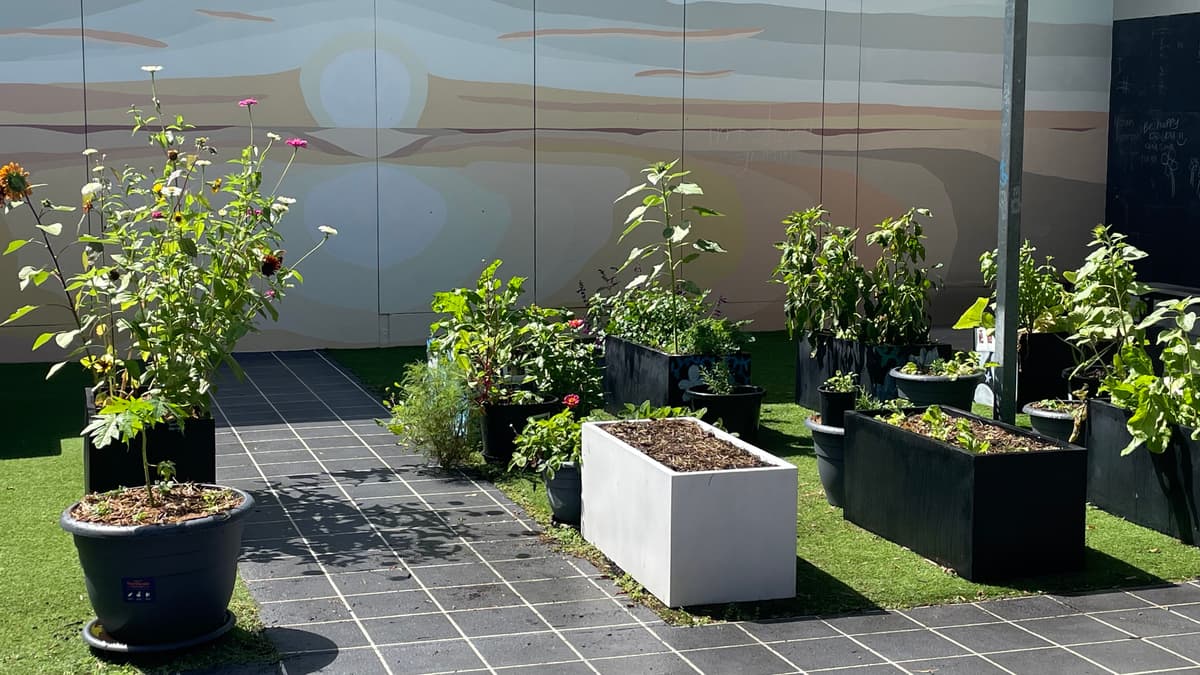
Evidence at scale matters, but so does what happens in the room. NatureWhole ran a single therapeutic garden session for young people at the Kamala Child & Adolescent Mental Health Unit at Lismore Base Hospital, with a simple before-and-after mood survey.
The results from that one session:
- 100% of participants reported their mood had improved to “good” or “great” afterwards.
- Those reporting a “great” mood rose from 6% to 50%.
- Reports of a “low” or “average” mood dropped to 0%.
We hold this up as exactly what it is: a small, single-session, self-report snapshot, not a controlled trial. But it is real, local, and it mirrors the direction of the broader literature. For a decision-maker weighing whether to pilot something within an existing unit, that combination of published evidence plus an on-the-ground signal is often the most persuasive case there is.
What good practice looks like
Nature-based therapy is not simply relocating a session outdoors. In our work it means:
- Structured, purposeful activity with a clear beginning, middle and end, so participants leave with something tended or grown.
- Trauma-informed facilitation that lets young people opt in to contact and conversation at their own pace.
- Integration with clinical care, not replacement of it, we work alongside the treating team, not around them.
- Lightweight measurement built in from the start, so a pilot generates the data a service needs to decide whether to continue.
This is the approach behind our Therapeutic Garden Program and our community sessions, and the same evidence base informs how we run our School Program for student engagement and wellbeing.
Where this leaves clinicians and decision-makers
The case for nature-based therapy in adolescent mental health is not that it is a cure, but that it is a credible, well-tolerated, evidence-supported complement to standard care, one that is unusually good at reaching young people who are hard to engage. The theory explains the effect, the youth-specific literature is maturing, and local experience points the same way.
If you are an OT, clinician or service leader considering a pilot, the most useful next step is a conversation about your cohort, your setting and what you would want to measure. You can get in touch or book a call to talk it through, no pressure, just a practical discussion about whether this is a fit for your service.
- research
- adolescent mental health
- horticultural therapy
- nature therapy
- clinical